Archive for the 'Books / Readings' Category

Books / Readings, Change!?!, Leadership, Missional

Some Quotes….

Here are some quotes worth sharing…

“Religious people have preferences; Missional people have stories” Bruce Wesley

“If you copy someone else’s vision, who will accomplish your’s?” unknown

“What causes exclusive community is fear. What causes inclusive community is love!” Hugh Halter

“If people aren’t asking about our lives, then we haven’t postured our faith well enough or long enough.” Hugh Halter

“The gospel is the tangible life of God flowing into every nook and cranny of our everyday life.” Hugh Halter

“People who only dream of community usually destroy it, but those who love people without expectation unknowingly create it.” Hugh Halter

“Missional people are individuals committed to forming their character and lifestyle after those of Christ and who are compelled to live out their faith in the context of a community.” Hugh Halter

Books / Readings, Change!?!, Decline/Growth, Leadership, Missional

Church Unique….

I beleive that each local church is unique and is given a specific mission from God that falls into the overall larger mission that every church has to glorify God and make disciples (apprentices) of Jesus. One of the things that happens to many of us is that without a motivating vision that is unique to us… we jump from one idea to the next in the hopes that something will get us where we want to go. I confess that I am part of a movement of pastors in America that have hopped on the Conference bandwagon that we spend time at ministry conferences hearing what is happening in certain churches and then try to imitate that hoping that it will help us too! Doing this ignores the fact that God has made each church unique and called us to a unique purpose. God doesn’t mass produce his church… each church is unique. “If we copy someone else’s vision, who will accomplish ours?”

In his book Church Unique, Will Mancini shares a process that will help us identify our unique vision and then a framework to guide the living out of that vision.

We all know that vision is key to kingdom growth. I came to Community of Joy in 1999 and in the first 10 months we changed the name, cast a new vision, established core values, and empowered leaders to lead… and as a result saw phenomenal growth, but then about 10 months into our journey, we started to platuea and then decline until a year ago, when God provided a new ministry center for us in the form of a building we purchased and renovated. That process brought us together in a profound way and as a result, we experienced another growth spurt… now we are back to the level we were at in late 2000 when we began our first plateau. Interesting enough, we are now experiencing another plateau. Having been down that road before, I don’t want to go there again… that’s why I am calling our congregation to embark on a journey of clarifying vision and even considering partnering with one of Will Mancini’s Vision Navigators to help us do that.

One of the realities that we still face inspite of casting a new vision and having buy in… is that for most of our long term core folks… the motivating vision for them is still to become a self-supporting autonomous congregation that has it’s own building and meets it’s budget, pays it’s mortgage on time and experiences modest growth. But that really isn’t much of a vision and certainly not one that we need God’s help to accomplish!

Besides, the church is a by-product of a motivating vision not the focus of vision. Being the incarnational/ missional people of God who are sent into the world to share God’s love with the world and invite people to join in the journey is the overarching vision we have and if we can live out that in specific and unique ways, people will be drawn to the journey and the church will grow.

Books / Readings

Two books to recommend…

During these past two weeks, I have read 6 books that deal with the Emerging/Missional Church… There was Exiles by Michael Frost, followed by The Forgotten Ways by Alan Hirsch and then Breaking the Missional Code By Ed Stetzer and David Putman followed by Breaking the Discipleship Code by David Putman and finally the two books that I want to recommend to you… Church Unique: How missional leaders cast vision, capture culture and create movement by Will Mancini (www.churchunique.com) and The Tangible Kingdom: Creating Incarnational Community by Hugh Halter and Matt Smay.

I hope to do a blog entry later this week on both of these two books… but for now, until I get time to do more indepth … let me encourage you to look at these two books.

The Tangible Kingdom does the best job of any book I have read lately of setting the stage for understanding what exactly is going on in the big “crack” that we find ourselves in and then it pushes beyond that to suggest a process for becoming incarnational and missional in our everyday lives!

Church Unique recognizes that we jump on the conference bandwagon or the imitate church x bandwagon too often and neglect the uniqueness of our own churches. Will then sets forth a framework for discovering what our Kingdom Concept as he calls it is… what specifically God has called us to be and do and then helps frame that in a vision frame that brings clarity and accomplishment as well as advances the vision. I am so excited about the framework that he puts forth that I inquired about getting some help from a “vision navigator”. I hope to blog on this too shortly.

Anyone else read these books?

Books / Readings, Change!?!, Leadership

Simple Church?

I just read a book called, Simple Church by Thom Rainer and Eric Geiger. The premise of the book is that growing, vital churches are those who keep things simple. Do either of the following illustrations apply to your church?

We live in a fast-food world with super-size me expectations. Here’s one quote from the book:

“There is an epidemic of fast-food spirituality among believers today. We like big spiritual menus with lots of options. And we want those options served fast.

Many churches have become like fast-food establishments. A new idea emerges, and the menu is expanded. Someone wants a special event served in a particular way, and the menu is expanded. People assume that the more that can be squeezed into the menu, the better. So the brochure, the week, the calendar, the schedule, and the process gets expanded. Cluttered.” (p.199)

I’ve seen churches add more and more programs to the “menu” of their activities. Its very difficult to stop doing something when something new is added. We find it hard to lay things to rest, and so we just add more to the calendar. This creates a huge problem for smaller and mid-size congregations. We all have a finite amount of time and energy. If the church continually asks for more, something is going to suffer! (For some help in laying to rest a ministry, go to “Closing Down a Ministry”. Here you can listen to an 80 second presentation by Leith Anderson.)

Here’s another thought: churches, like people, can be thought of as pack rats. When I first arrived at my last congregation as pastor, I was amazed by the amount of stuff (mostly ancient records) that cluttered the church office. There was no space to put away anything new.

Programs and activities can be another source of clutter. Here’s another quote from page 204: “Many churches are littered with clutter. Floundering programs and ministries are stored and piled on top of one another. It is hard for people to make their way through the process of spiritual transformation because of the distracting clutter. . . it is interpersonally and historically challenging (to eliminate programs). People and history are involved.”

The solution can be summarized in four words: Clarity — Movement — Alignment — Focus.

Clarity: How clear is the mission or God’s calling upon your church?

Movement: How well are you moving your people through the process of connecting with God, growing in discipleship and getting engaged in ministry?

Alignment: How does everything your congregation does align with its mission and process for developing disciples?

Focus: How well are you able to keep the church focused on the above and free from distracting clutter of other (new) programs, activities or special events?

This book is an easy read, though you have to wait to the final chapter to really understand how to develop a “Simple Church”. Obviously, it would be a lot easier to create a simple church in a church plant vs. those of you in congregations that are decades old.

Have any of you read this book and tried to apply its principles? If so, has it helped? I’d love to hear from you!

Jeff
Books / Readings, Change!?!, Missional

Dan Kimball in PSWD

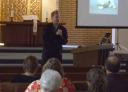
The Pacific Southwest District held their annual Spring Event recently. This year’s speaker was Dan Kimball. Dan at Spring Event.

Dan was asked to speak on the topic, They Like Jesus But Not the Church. His presentation was one of the most engaging ones we’ve had in the history of this event. He began by talking about how most Christians live within a “Christian bubble”. They shop at Christian stores, listen to Christian music, fill their calendars with Christian activities (inside and outside their local church) and hang-out with their Christian friends. While some may think this is a great life-style, Dan points out how this isolates us from those whom Christ is calling us to reach. The more we are isolated from them, the less we understand how they think and what we might do to actually reach them. In his book by the same title he writes, “Christians are now the foreigners in a post Christian Culture and we have got to wake up to this reality. . .”

He continued his presentation by sharing how we need to think of ourselves as missionaries in our neighborhoods. He also writes in his book, “When missionaries enter another culture, they listen, learn, study the spiritual beliefs of the culture, and get a sense of what the cultures’ values are. They may try to discover what experiences this culture has had with Christians and what the people of the culture think of Christianity. Missionaries in a foreign culture don’t practice the faiths or embrace the spiritual beliefs of that culture, but they do respect them, since the missionaries are on the other cultures’ turf. . .”

For the rest of the presentation, he touched on the following points in his book of why people don’t like the church. Though we may not agree with the following points, Dan shares that these are the perceptions of what others have on the church.
1) The church is an organized religion with a political agenda.
2) The church is judgmental and negative.
3) The church is dominated by males and oppresses females.
4) The church is homophobic.
5) The church arrogantly claims all other religions are wrong.
6) The church is full of fundamentalists who take the whole Bible literally.

I met with Dan in February and the night before the event to help him understand who the Brethren are and what might best work in his presentation (I had seen it twice before.). Of this list, the idea that we oppress females isn’t true in this district. In fact the two largest churches have women as pastors. Since the PSWD has had difficulty in dealing with the homosexual conversation in years past, I encouraged him to touch on the topic, show the video interview he has, stress how we need to be hospitable to all people, and move on.

At this point of the day, his coffee really started kicking-in. After he shared his material on how others think of the church as homophobic, he asked, “How does this issue play-out in the Church of the Brethren? How do you deal with the issue?”. For a moment, fear kicked-in. We had people from open and affirming congregations and people from the other side of the issue both present. What happened over the next 45 minutes was totally a gift from God! Dan led a discussion where people lovingly and respectfully discussed the issue of gay and lesbian involvement in the church and how we should reach out and care for them. It was a totally amazing time!

If you or others struggle with evangelism or being missional, I would highly recommend his book. This material can be helpful in changing our attitudes towards those outside the church and give us understanding on how they might be thinking. Zondervan has also created a DVD curriculum to teach the materials in the book in 6 small group sessions. It also has sermon outlines and shorter video clips to play in a worship service.

It was great to be surprised and blessed by God at the PSWD Spring Event!

« Prev - Next »